
Do you ever feel like you are working all day but getting nothing done? It is easy to get lost in a sea of endless notifications, sudden meetings, and unexpected emails. By the evening, you feel completely exhausted, yet your most important tasks are still untouched. If you want to stop feeling overwhelmed and start winning your day, time blocking is the simple solution you need to get back in the driver’s seat.
What is Time Blocking?
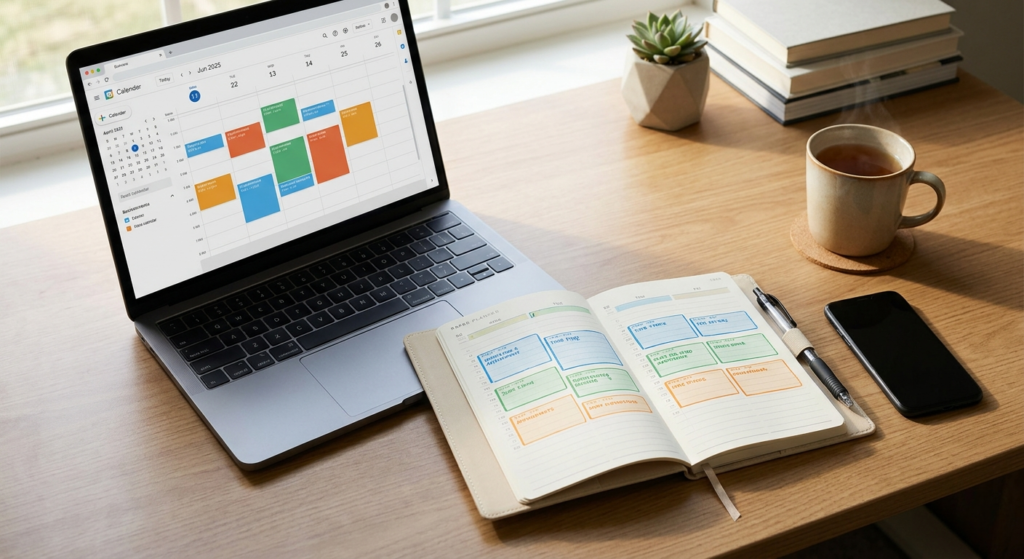
At its core, time blocking is a time management method where you divide your day into distinct blocks of time. Instead of keeping a long, scary to-do list, you give every single task a specific home on your calendar.
Think of it like a budget for your time. Just like a financial budget tells every dollar where to go, this system tells every hour what to do. You might have a two-hour block for writing reports, a thirty-minute block for checking emails, and a one-hour block for lunch. When you assign a specific job to a specific time slot, your day gets a clear, easy-to-follow map.
Why Time Blocking Works
Most people fail to get things done because they spend too much energy deciding what to do next. This is called decision fatigue. When you sit down at a messy desk with fifty different tasks to choose from, your brain gets tired before you even start working.
By using time blocking, you make all your decisions the night before or early in the morning. When a new time block begins, you do not have to think or choose. You just look at your schedule and start the assigned task. This gives you incredible mental clarity and keeps your focus sharp.
Furthermore, having a structured schedule keeps your mind calm. Research from the American Psychological Association shows how stress affects focus and productivity, making it harder to think clearly when you are overwhelmed. Securing your tasks into dedicated time frames lowers this daily anxiety and helps you work peacefully.
Time Blocking vs Reactive Work
To understand the true power of a structured calendar, let us compare two different types of workdays:
| The Reactive Day (No Plan) | The Time Blocked Day (Structured) |
| You check emails constantly. | You check emails during specific times. |
| One loud notification ruins your hour. | You block out distractions to focus deeply. |
| You guess what task to work on next. | Your calendar tells you exactly what to do. |
| You feel busy but accomplish very little. | You complete your most vital goals early. |
When you work reactively, you let the outside world dictate your day. You are simply reacting to what other people want from you. When you switch to a structured calendar, you protect your time and ensure your own priorities come first.
How to Use Time Blocking (Step-by-Step)
Starting this habit is simple. You do not need fancy apps; a basic paper planner or a free digital calendar will work perfectly. Follow these four easy steps:
- Plan your day in advance: Spend ten minutes every evening planning the next day. Look at your tasks and commitments so you are never caught off guard.
- Assign time slots: Create specific blocks on your calendar for different activities. Be realistic about how long a task will take, and always leave a little extra room for breaks.
- Focus on one task per block: Treat your time blocks like important meetings with a boss. Turn off your phone notifications and commit 100% to the single task at hand.
- Avoid multitasking: Do not try to write a report while answering messages. Multitasking splits your brain power and causes mistakes. Do one thing at a time, finish it, and move on.
Combining Time Blocking with the Pomodoro Technique
If you want to supercharge your productivity, you can combine your calendar blocks with a time-tracking system. Sometimes, looking at a large two-hour block of work can still feel a bit intimidating. That is where a Pomodoro focus timer becomes a lifesaver.
Inside your large time block, use the Pomodoro method to break the work into smaller pieces. You can work with intense focus for 25 minutes, take a short 5-minute break to stretch, and then repeat.
[ 2-Hour Time Block ]
 ├── 25 min Work + 5 min Break
 ├── 25 min Work + 5 min Break
 ├── 25 min Work + 5 min Break
 └── 25 min Work + 5 min Break
This combination gives you the best of both worlds. The calendar block protects your time from outside distractions, while the short intervals keep your energy levels high.
Conclusion
Taking control of your schedule does not require a complex strategy or endless willpower. It simply requires a clear plan. By using time blocking, you can stop guessing what to do next and finally make steady progress on your biggest goals.
Do not worry about making your schedule look absolutely perfect on your first try. Grab a piece of paper or open your calendar app right now, and block out just two hours for your most important task tomorrow. Once you take that first step, you will see how easy it is to own your day.